Written by
Abbie Mason
How QSRs Can Turn Catering Into Reliable Revenue Using Slerp
2025 reporting on the UK QSR sector shows consumers remain highly price conscious and footfall is still sensitive to economic pressure and saturation from continued store expansion.
Introduction
As we move towards January 2026, the same post Christmas pattern is likely to repeat.
Personal discretionary spend drops, walk in traffic becomes lighter, and average ticket values soften. 2025 reporting on the UK QSR sector shows consumers remain highly price conscious and footfall is still sensitive to economic pressure and saturation from continued store expansion. (QSR Media UK)
Corporate routines return faster than personal spending. Across 2025, office based food spend strengthened as employers reinforced in office schedules and teams returned to structured midweek attendance. The contract and corporate catering market stayed one of the most resilient growth areas in UK foodservice through 2025, supported by hybrid work routines that still generate predictable meeting and team food demand. (Reuters)
The commercial window for QSRs in January 2026 is clear. While the high street resets slowly, offices restart quickly, which makes catering one of the most dependable revenue drivers.
Why Catering Stays Strong When Walk Ins Dip
Catering performs in quieter months because it is driven by workplace structure.
Spend comes from budgets, not wallets, as departmental and meeting budgets reopen immediately in January and are used for group food ordering. (Masters Catering)
Group orders lift average order value compared with single transactions.
Routines repeat weekly through anchor days, planning sessions, and client meetings. (Reuters)
Reliability matters most, meaning teams re order what is easy and consistent.
London’s major office hubs keep demand concentrated and predictable, with office density creating repeat catering occasions per site each week. (pearllemoncatering.com)
What QSRs Need for a Strong January 2026 Catering Offer
A scalable catering push does not require a full operational overhaul. It needs clarity, convenience, and visibility.
One workplace menu including breakfast trays, individual mains, and sharing platters.
Office ready packaging that is stackable, easy to serve, and minimal mess.
Guaranteed delivery windows aligned to meeting start times.
Simple ordering assets such as a one page PDF menu and rapid reorder links.
In store prompts aimed at commuters and hybrid teams, including QR codes, bag inserts, and counter cards.
The aim is to create recurring office drops, not just one off orders.
We Have a Solution! Scale Corporate Catering Through Slerp.

For QSR brands, the simplest way to make catering a reliable direct channel is to run it through infrastructure built specifically for corporate and group ordering. This is where Slerp fits.
What Slerp does for catering
Slerp helps QSRs run catering as a direct channel, purpose-built for corporate and group ordering. It makes it easy to:
Operate a branded catering storefront with pre-set menu packages (for example, party platters) that can be ordered for both Delivery and Click & Collect.
Automate production with scheduling, labelling, and cut-off times chosen by you.
Offer timed delivery slots that suit offices and corporate gatherings.
Capture customer data and convert one-off catering orders into repeat corporate clients.
Access Slerp’s specialist catering courier network - including Genii, Pedivan, Addison Lee and Gophr - covering every vehicle type, with live operations managed by Slerp, real-time driver tracking and full customer support.
Run catering orders in a workflow that feels natural for the kitchen: predictable, pre-scheduled, and more profitable than marketplace-driven volume. Partners like Detroit Pizza and Ottolenghi already use Slerp this way.
Key market stats showing why catering matters right now
Recent indicators highlight why operators are prioritising catering this winter and heading into January:
Catering demand peaks in Q4, with many QSRs seeing 30–50% more volume October-December.
Average catering order values typically land between £150–£300+, compared with £15-£25 for standard QSR orders.
Corporate catering continues to grow, with 40% of offices ordering at least weekly.
More than 60% of customers prefer ordering catering directly from the restaurant, rather than through marketplaces.
“Now that we’re firmly in Q4, this is the moment for QSR brands to lean into catering. Offices are planning end-of-year meetings, celebrations and winter lunches, and they want reliable, high-quality food delivered on time. With Slerp, restaurants can turn these occasions into stable, repeatable revenue, well beyond the season.”
— Calum May - Senior Sales & Business Development Manager at Slerp
Example Slerp x Lala x Detroit Pizza
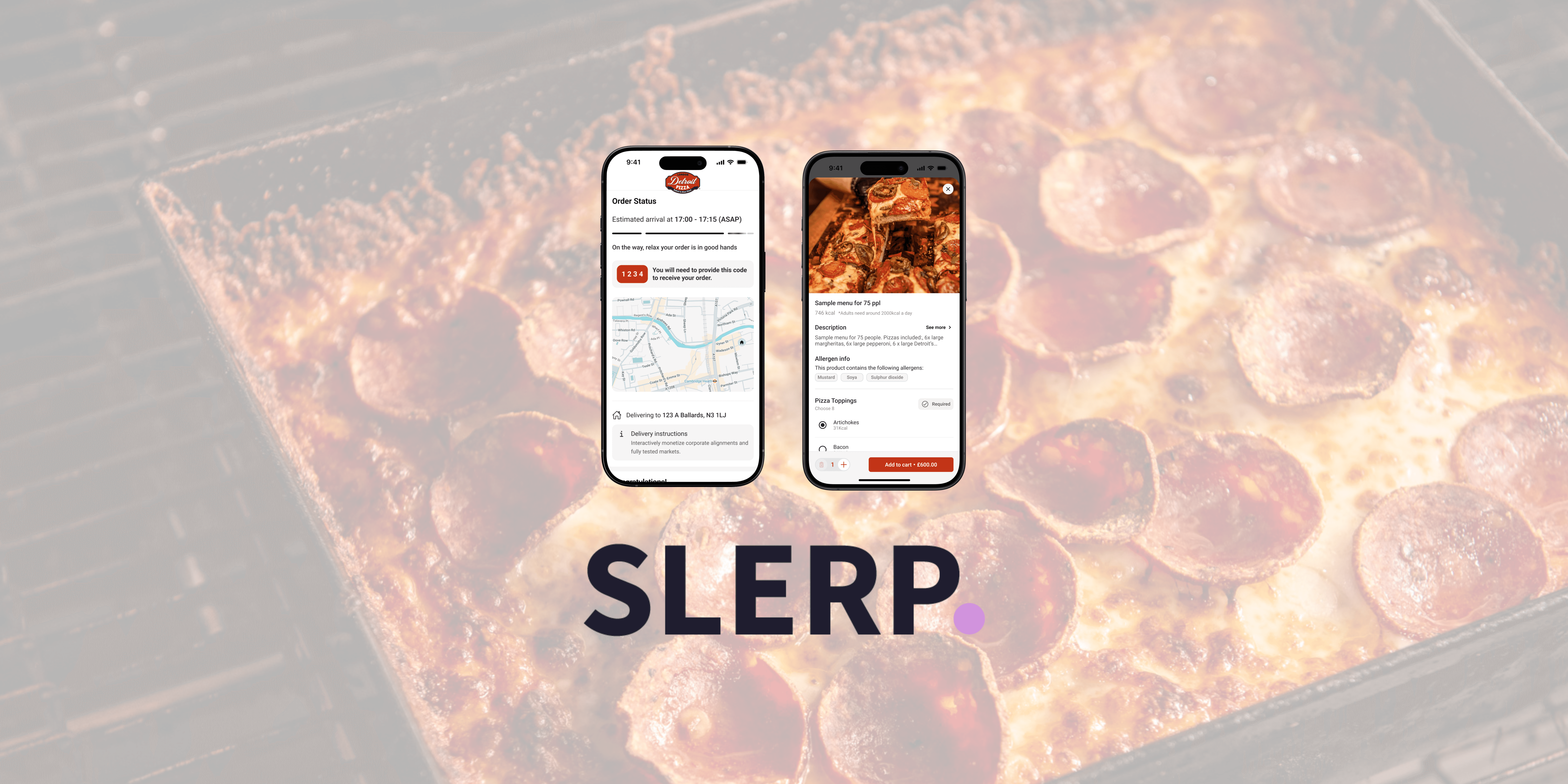
Detroit Pizza’s Slerp rollout shows how a QSR can convert catering into repeatable revenue through direct ordering that supports large baskets and repeat business.
How Lala supported alongside Slerp for Detroit Pizza:
Created corporate offers focused on office drops and recurring ordering.
Implemented loyalty and rewards for more money conscious periods like January, encouraging return visits even when spend is cautious.
Delivered automations and push notifications to keep both corporate buyers and individuals engaged.
Segmented work email sign ups to create a targeted segment to reach via a CRM strategy.
This meant catering drove stability, while loyalty protected repeat trade through the quieter season.
Conclusion
Bottom Line for January 2026
January 2026 will again reward the QSRs that move early into structured corporate catering. Offices return with fixed routines and active budgets when personal spend is still rebuilding. With Slerp providing the direct catering engine and Lala building the corporate strategy and retention layer, QSR brands can enter 2026 with predictable revenue already in motion.