Written by
Abbie Mason
The Marketing Lesson Hidden Inside Britain's Cake Shed Boom
If you've spent any time on local Facebook groups recently, chances are you've seen one.
Introduction
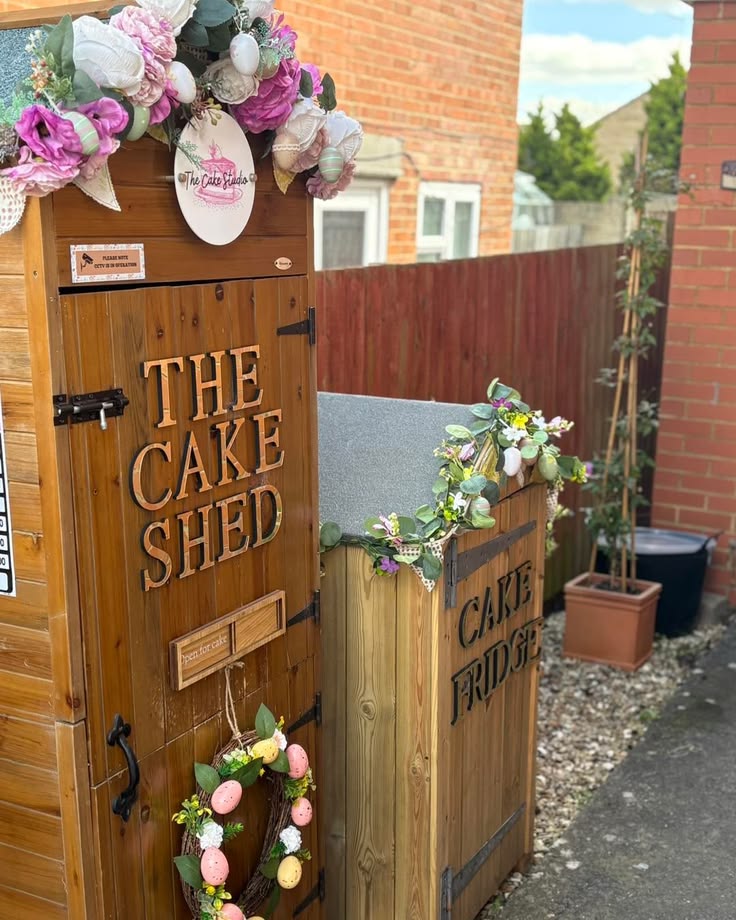
A brightly painted shed. A shelf full of brownies. A handwritten sign. A queue forming before 10am.
Cake sheds have quietly become one of Britain's fastest-growing micro-business trends. What began as a handful of home bakers selling surplus stock from their front gardens has evolved into a nationwide movement, with hundreds of operators now trading across the UK and dedicated online communities growing by hundreds of members every week (BBC News via AOL).
Recently, the trend found itself in the national spotlight following coverage on Good Morning Britain and wider reporting around council licensing requirements. In some areas, operators have been warned they may need street trading licences costing more than £1,000 per year, prompting a wider debate about how these businesses should be regulated (GB News).
Whilst the licensing debate has dominated headlines, it's arguably not the most interesting part of the story.
From a marketing perspective, cake sheds reveal something many businesses still struggle to understand.
The Hyperlocal Strategy Cake Sheds Have Already Nailed
For years, businesses have been encouraged to think bigger.
More reach.
More followers.
More impressions.
More markets.
Yet cake sheds have quietly succeeded by doing the opposite.
Most operators aren't trying to reach the entire country. They're building businesses around people who live nearby. Neighbours. School parents. Dog walkers. Local office workers. People who regularly pass by and know exactly where to find them.
It sounds obvious.
Yet many businesses spend years chasing audiences whilst overlooking potential customers on their own doorstep.
According to the Local Consumer Review Survey 2025 (BrightLocal), 98% of consumers searched online for information about a local business in the last year, whilst 78% searched for local businesses at least once a week.
That's a powerful reminder that people aren't always looking for the biggest or most well-known option.
Often, they're simply looking for the nearest.
A baker in Kent doesn't need followers in Glasgow.
A cake shed owner in Nottinghamshire doesn't need engagement from Bristol.
They need someone five minutes away who fancies a brownie on a Saturday afternoon.
That's not a smaller opportunity. It's a more relevant one.
Community Before Marketing
One of the reasons cake sheds have spread so quickly is because they don't start from scratch.
The audience already exists.
Most operators launch into communities that are already connected through local Facebook groups, WhatsApp chats, schools, sports clubs and neighbourhood networks.
When a new cake shed opens, news travels quickly.
Not because somebody has spent thousands on advertising.
Because somebody's neighbour has posted a photo of a Biscoff brownie and suddenly half the village wants one too.
Research into hyperlocal communities found that people are significantly more likely to engage with businesses and initiatives that contribute positively to local life (Power to Change).
Trust behaves differently at a local level.
A recommendation from a neighbour often carries more weight than a sponsored social media advert.
A post in a local Facebook group can outperform a paid campaign.
And a good product quickly becomes part of local conversation.
Many brands spend years trying to build communities around their businesses.
Cake sheds often inherit one on day one.
They're Not Really Selling Cake
The irony is that many successful cake shed operators aren't actually marketing cake.
They're marketing convenience.
They're marketing familiarity.
They're marketing locality.
Customers know where the shed is.
They know who baked the products.
They know the money is staying within the local economy.
In an era where consumers increasingly value authenticity and local connection, that matters.
The business model itself is remarkably simple. Most sheds operate with minimal overheads, no commercial lease and little more than a contactless payment system and a well-stocked shelf (MoneyMagpie).
The result is a business that feels personal rather than transactional.
It's difficult to compete with a brownie that's available two streets away.
The Numbers Are Hard To Ignore
What started as a side hustle is becoming a serious source of income for some operators.
BBC reporting highlighted the story of Danielle Edgington, whose Lavender Cake Shed in Birmingham reportedly generates between £500 and £1,000 per week, attracting customers from neighbouring towns as well as her immediate community (BBC News via AOL).
Meanwhile, operators across the country continue to join dedicated cake shed networks and directories, helping consumers discover nearby businesses whilst reinforcing the hyperlocal nature of the trend.
This isn't a national bakery chain.
It's hundreds of independent businesses serving individual communities.
And that's exactly why it's working.
When A Micro-Business Trend Becomes Big News
The rapid growth of cake sheds has inevitably attracted attention from regulators.
In Bassetlaw, Nottinghamshire, operators were informed they could require a street trading licence costing £1,007 annually, leading to criticism from business owners and residents alike (GB News).
Following public feedback, Bassetlaw District Council confirmed it would review its approach to cake sheds and cupboards operating within the district (Bassetlaw District Council).
It's an understandable challenge.
Cake sheds sit somewhere between a home bakery, a retail outlet and a community enterprise.
Many regulations simply weren't written with this type of business model in mind.
Whether licensing requirements ultimately change or not, the debate itself demonstrates how quickly the trend has grown.
You don't end up on national television by accident.
Conclusion
What Businesses Can Learn From The Cake Shed Boom
Although judging by the queues forming across the country, it's not the worst idea. The lesson is that proximity still matters. Whilst many businesses continue chasing broader reach, larger audiences and more followers, cake shed owners have quietly focused on something far more valuable. The people most likely to become customers. Not everyone. Just the right people. In a world obsessed with scale, Britain's cake sheds are proving that sometimes the smartest growth strategy isn't thinking bigger. It's thinking closer to home.