Written by
Abbie Mason
The World Cup halftime show and the risk of forgetting your audience
For the first time in its history, the FIFA World Cup Final had a halftime show.
Introduction
On paper, it made perfect sense.
Take one of the biggest sporting events on the planet, add Justin Bieber, Madonna, Shakira, BTS and a collection of other global names, then create another huge entertainment moment around the match.
FIFA described it as a landmark meeting of football, music and global impact. The show was also connected to the FIFA Global Citizen Education Fund, giving it a wider purpose beyond entertainment.
There was clearly plenty of ambition behind it.
But ambition and audience fit are not the same thing.
Reviews of the show were mixed. Entertainment Weekly praised some of its more memorable moments but described the overall experience as fragmented, with too many performers competing for attention in a short amount of time.
The Times was much less generous, arguing that the production felt overblown, underwhelming and too heavily influenced by the Super Bowl.
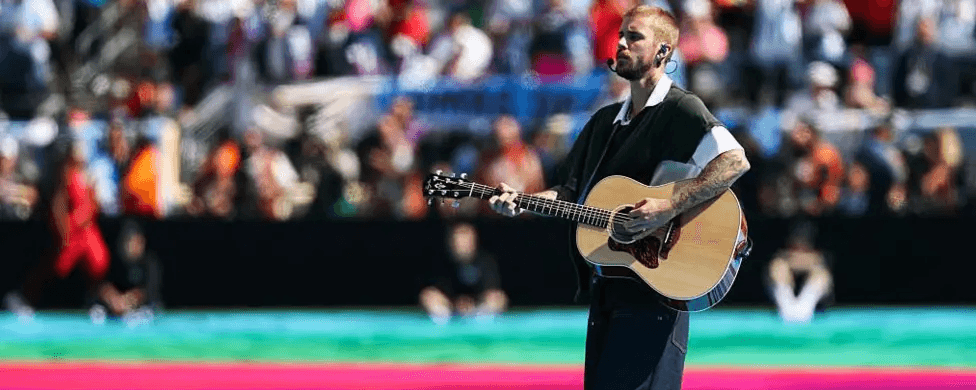
Justin Bieber’s stripped-back performance became one of the biggest talking points. It was a quieter moment in the middle of an event designed to feel enormous. Some liked the contrast. Others thought it slowed the energy at exactly the wrong time.
But the real marketing lesson is not about whether Bieber picked the right song.
It is about what happens when you take something that works brilliantly for one audience and assume it will work just as well for another.
A successful idea is not always a transferable one
The Super Bowl halftime show works because it is part of the Super Bowl.
People expect celebrity performances, huge production and spectacle. The adverts and entertainment surrounding the game have become part of the attraction, not a distraction from it.
The World Cup has a different history and a different relationship with its audience.
For football supporters, halftime is traditionally a pause. It is time to discuss the first half, complain about the referee, check messages, grab a drink and prepare for the football to start again.
The football is the entertainment.
That does not mean FIFA should never try anything new. Audiences change and events need to evolve.
But coverage of the final questioned whether a Super Bowl style production belonged in the middle of football’s biggest match. That reaction shows the risk of starting with a successful format rather than the people who will experience it.
Brands make the same mistake all the time
We see another company doing something well and immediately start wondering how we can copy it.
Our competitors have launched a podcast.
Everyone is on TikTok.
We need more video.
We should be using AI.
We need to make the brand funnier.
None of those ideas is necessarily wrong. The problem is when the only reason for doing them is that somebody else is doing them.
A podcast might work because a competitor has an audience that actively looks for detailed industry conversations. TikTok might work because its customers already use the platform to find products. A playful tone might work because the brand has spent years building enough trust to get away with it.
The visible tactic is easy to copy.
The audience relationship behind it is not.
Start with what your audience actually wants
Before choosing a channel, format or creative idea, brands need to understand what role they play in their audience’s lives.
Some people want to be entertained. Others want expert advice or reassurance. Some want to spend time with a brand, while others simply want their problem solved as quickly as possible.
Knowing that changes the marketing you create.
It helps you decide whether your audience needs a podcast or a short email. Whether they want a clever campaign or a clear answer. Whether a new feature will improve the experience or interrupt something they already value.
That last point is important.
The World Cup halftime show did not just add something new. For some viewers, it changed the rhythm of an experience they already understood and enjoyed. Reports suggested that halftime was extended significantly to accommodate the production, which added to the feeling that the spectacle was competing with the match rather than supporting it.
New does not automatically mean better.
Different does not automatically mean relevant.
Learn from competitors without becoming them
There is nothing wrong with looking at what other brands, industries or sporting events are doing.
In fact, borrowing ideas from somewhere unexpected can produce brilliant marketing.
But inspiration needs to be followed by adaptation.
Before replicating something that works elsewhere, ask why it works. Look at the audience expectations, the context and the relationship the organisation has already built.
Then ask whether those same conditions exist for your brand.
Your competitors can show you what is possible. They cannot tell you what your audience needs.
Conclusion
The real lesson from Bieber’s halftime show
FIFA’s first World Cup Final halftime show was bold, ambitious and built around some of the biggest performers in the world. FIFA’s own recap celebrated it as a landmark moment in World Cup entertainment. Some viewers enjoyed it. Others wondered why it was there at all. That divide is exactly what makes it such a useful marketing example.