Written by
Abbie Mason
Chosen by Feel, Not the Algorithm
There was a time when buying something began before the payment.
Introduction
The evaluation came first. The transaction followed.
Now, particularly in the fashion and lifestyle sectors, we often reverse the order.
We scroll. The algorithm suggests. We click, we pay, the parcel arrives. Then we touch, then we assess. Then, increasingly, we return.
The order has changed, and that shift has commercial consequences.
At Lala Comms, we work inside performance marketing ecosystems every day. We build paid media strategies, refine segmentation models and optimise for conversion. But sustainable growth is not just about driving transactions. It is about driving decisions people stand by.
From high street theatre to predictive feeds
Retail has always evolved alongside technology.
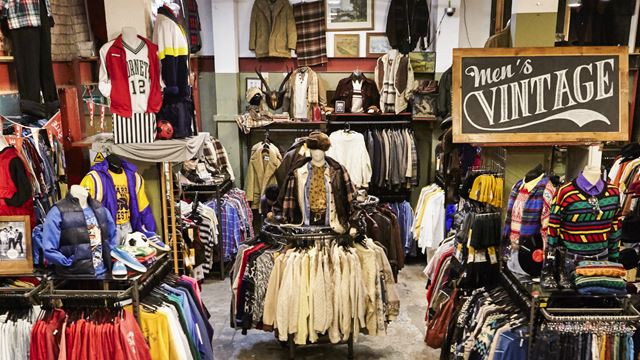
The post-war high street was built on that physical foundation. Shopping was tactile and social. You browsed, compared and spoke to someone face to face.
E-commerce reshaped convenience in the late 1990s and early 2000s. The structural impact of Amazon on retail behaviour has been widely documented, and early online shopping was still largely intentional; you searched for something specific.
The behavioural shift came with algorithmic discovery.
Instagram moved from chronological to algorithm-based ranking in 2016, fundamentally changing how content and products are surfaced.Platforms such as TikTok rely almost entirely on predictive recommendation systems to determine what users see before they search. Products no longer wait to be looked for, they are surfaced. Discovery became passive, and marketing became predictive.
Fashion and the economics of reversed evaluation
Fashion highlights this shift most clearly because clothing is inherently tactile.
Texture communicates quality, and is a physical indicator that imagery cannot fully replicate.
When consumers evaluate garments only after delivery, return rates increase. Industry data frequently places online fashion return rates at 25-40%, significantly higher than in-store retail, according to Barclaycard consumer spending insights and commentary from the British Fashion Council.
This has real commercial impact.
Revenue is processed at checkout but diluted by reverse logistics; operational costs increase, margins tighten, and environmental strain rises. McKinsey has highlighted the financial and sustainability pressures linked to returns and overproduction within the fashion sector.
Algorithms optimise for clicks and completed transactions. They do not account for how a sleeve feels against skin or whether a cut sits correctly on the body.
As marketers, that gap matters.
Growth built on high return rates is not efficient growth.
Filter bubbles and narrowed discovery
Recommendation systems are designed for relevance. They analyse behaviour, dwell time, demographic modelling and audience similarities. In commercial terms, this means consumers increasingly see more of what they have already engaged with. Similar brands, similar silhouettes, similar price points.
Relevance improves as diversity narrows.
That drives short-term performance. It does not always support long-term brand growth or genuine discovery.
At Lala Comms, we believe effective marketing must create space for both precision and exploration.
Food, hospitality and the primacy of taste
Hospitality provides a useful contrast: You cannot digitise taste.
Marketing in food and beverage relies heavily on visual persuasion. We plate dishes for photography. We use lighting and composition to stimulate appetite. Research into sensory marketing shows that taste and smell play a significant role in memory formation and emotional association.
People eat with their eyes first, but they return because of flavour.
The algorithm may fill a table once. Taste fills it again.
For hospitality brands, the sensory layer cannot be removed, it must be delivered. Marketing can drive awareness, but it’s experience that drives retention.
Long term brand building versus short term optimisation
The IPA’s landmark effectiveness study, ‘The Long and the Short of It’ demonstrates that brands investing in long-term brand building outperform those focused solely on short-term activation.
Short-term conversion metrics are visible and immediate. Long-term brand equity is cumulative and protective.
At Lala Comms, our approach integrates both performance and principle. We build strategies that convert, but we analyse beyond cost per click. We look at retention, lifetime value and brand perception. We align creative with product integrity so that what is promised online is delivered offline.
Ethical marketing does not reject algorithms. It questions how they are used.
It means responsible retargeting frequency. Transparent data practices. Creative rooted in substance rather than artificial urgency.
It means designing campaigns that result in purchases people keep, meals people recommend and brands people trust.
Conclusion
Chosen by feel
There is a meaningful distinction between something being shown to you and something being chosen by you. The future of retail and hospitality marketing is not about removing predictive systems. It is about ensuring that technology supports informed decision making rather than replacing it. Touch still matters. Taste still matters. Atmosphere still matters. When brands respect that, return rates decrease. Loyalty increases. Word of mouth strengthens. If you are building a retail, fashion or hospitality brand and want to balance performance with principle, we would welcome that conversation. Because sustainable growth is not just about appearing in the feed, it's about being chosen by feel.